Bench Rotations Driving Shifts in Football Match Odds
Written by Riley Wolf · Jun 21, 2026

Bench Rotations Driving Shifts in Football Match Odds
Football teams manage their squads through planned rotations and timed substitutions, factors that directly feed into how bookmakers adjust live odds throughout a match. Data from major leagues shows these bench decisions often trigger immediate recalibrations in betting markets, especially when fresh players enter the pitch and alter tempo or tactical balance. Observers note that in competitions running through June 2026, such as ongoing domestic cups and international qualifiers, the timing of these changes has grown more visible in odds movements tracked by analytics platforms.
Core Elements of Bench Dynamics
Bench strength encompasses the quality and depth of available substitutes, along with coaching decisions on when to deploy them. Researchers tracking Premier League and Bundesliga fixtures have recorded that teams with stronger benches maintain higher possession percentages after the 60-minute mark, a pattern that correlates with shifts in live draw odds and over/under totals. These adjustments arise because fresh legs reduce defensive errors and increase chance creation, metrics that betting models incorporate within minutes of each change.
Coaches weigh player fatigue against match context when selecting replacements. In high-stakes fixtures, early substitutions for attacking players frequently coincide with shortened odds on the leading side, while defensive reinforcements tend to stabilize prices on under goals. Studies compiled by sports data firms indicate these patterns hold across multiple seasons, with substitution clusters between minutes 55 and 75 producing the largest single-minute odds swings.
Live Odds Response Mechanisms
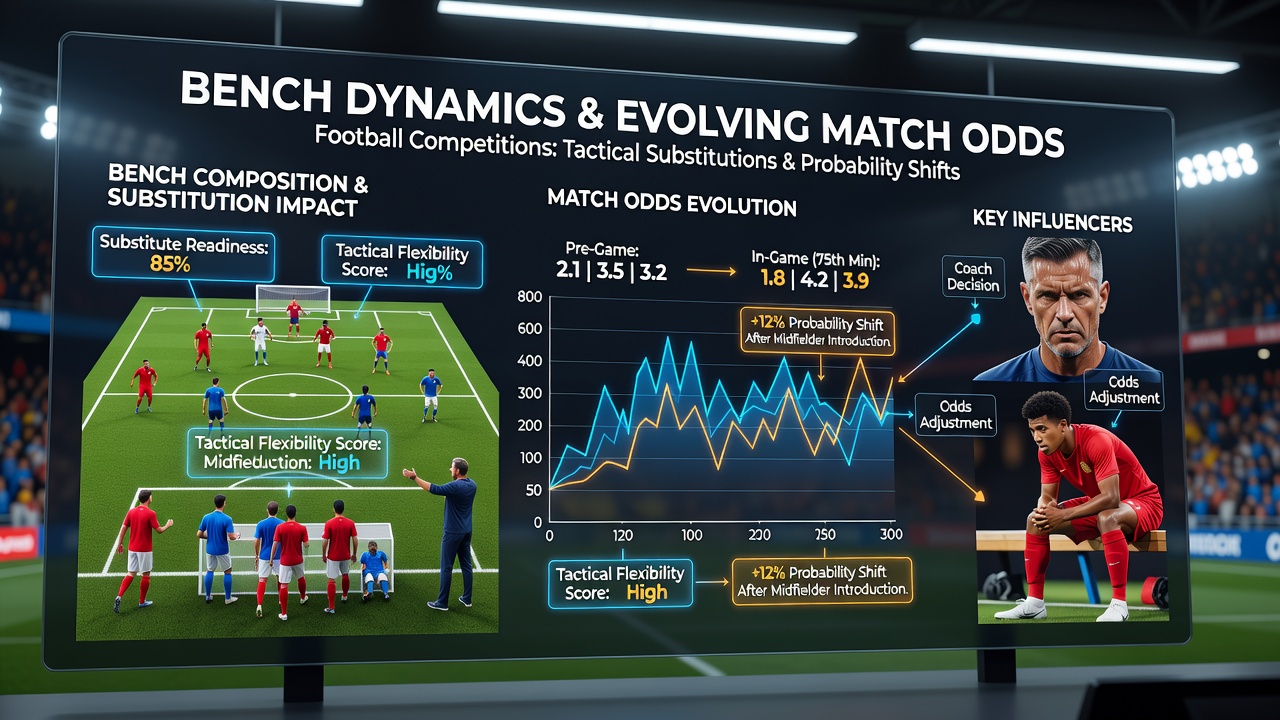
Betting exchanges and traditional bookmakers update probabilities using real-time inputs that include substitution notifications. When a star forward enters from the bench, algorithms often lower the price on a win for that side by several percentage points within the first exchange window. Conversely, an injury-forced change involving a key midfielder can widen the spread on the opposing team, reflecting reduced control in midfield zones. Analysts at organizations such as the International Sports Data Association have documented these reactions across European competitions, noting consistent alignment between substitution impact ratings and subsequent market movements.
Weather conditions and fixture congestion further amplify bench effects. In June 2026 schedules marked by back-to-back matches, teams relying on deeper squads show steadier odds trajectories because they avoid sharp declines in performance metrics after halftime. Live bettors monitoring these variables often see value emerge when markets lag behind the statistical edge created by a strong bench introduction.
Case Patterns Across Competitions
One recurring scenario involves underdog sides deploying energetic midfielders late in games, a move that frequently compresses the odds gap even when the scoreline remains unchanged. Tracking data from Serie A encounters reveals that such entries correlate with a measurable uptick in expected goals for the trailing team, prompting bookmakers to tighten the handicap line accordingly. Similar dynamics appear in Champions League knockout ties, where squad rotation policies set before the match influence pre-game odds but then evolve rapidly once substitutions occur.
Teams facing travel fatigue in summer tournaments during June 2026 demonstrate another clear link. Those with multiple high-quality options on the bench maintain more stable live prices because they sustain pressing intensity longer. Reports from academic groups including the Journal of Sports Analytics confirm that substitution effectiveness scores predict odds volatility better than raw possession figures alone in these congested periods.
Strategic Implications for Market Participants
Market makers integrate bench composition data into their models well before kickoff, yet live adjustments still occur when actual usage deviates from expectations. Observers following these trends find that monitoring substitution patterns yields clearer signals than tracking possession alone. In matches where both sides hold comparable bench depth, odds tend to stabilize after the first change, whereas mismatches between squad resources produce extended volatility windows.
Fixtures scheduled in June 2026 continue to highlight these relationships as leagues balance end-of-season demands with international windows. The interplay between planned rotations and in-game responses remains a measurable driver of how odds evolve from opening prices through full time.
Conclusion
Bench dynamics exert measurable influence on football match odds by altering performance metrics that betting models track in real time. Substitution timing, player quality off the bench, and squad depth collectively shape the direction and magnitude of live price movements across competitions. Data collected through 2026 seasons reinforces these connections, showing consistent correlations between bench usage and odds recalibrations in both domestic and international settings.