Dynamic Capital Allocation in Multi-Venue Betting Through Streaming Data Analytics
Written by Kai Zimmermann · May 29, 2026

Dynamic Capital Allocation in Multi-Venue Betting Through Streaming Data Analytics
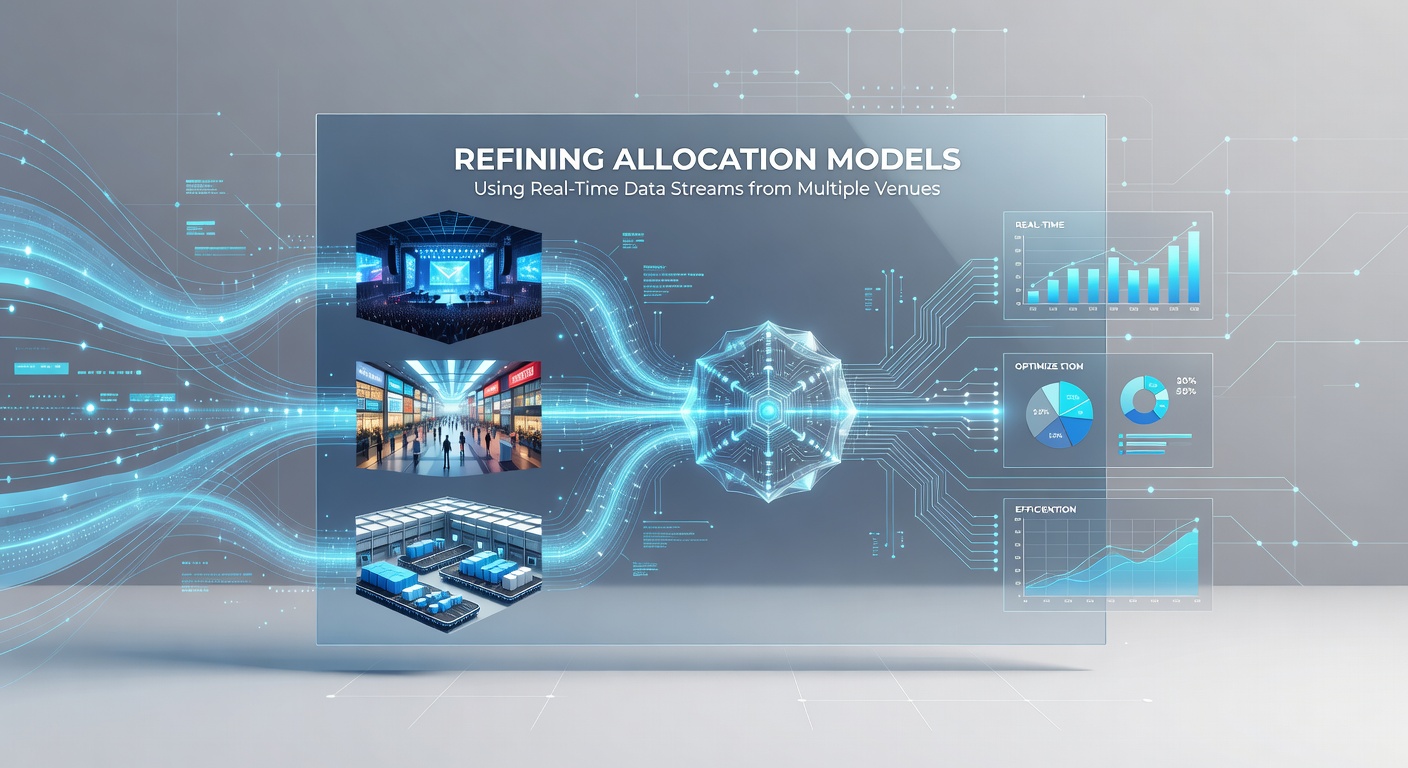
Allocation models in betting environments rely on continuous inputs from racetracks, sportsbooks, and exchanges to distribute capital across opportunities. Real-time data streams supply updates on odds movements, liquidity levels, and event probabilities, allowing adjustments that static models cannot achieve. Operators integrate these feeds to recalibrate positions as conditions evolve during live events.
Multiple venues generate distinct data formats and update frequencies. A horse racing exchange might stream tick-by-tick price changes while a tennis tournament platform delivers point-by-point probabilities. Researchers at institutions such as the University of Sydney have documented how combining these heterogeneous sources improves model responsiveness when tested against historical event data.
Core Components of Allocation Models
Traditional allocation frameworks assign fixed weights based on historical averages and predefined risk thresholds. Real-time integration replaces those fixed weights with dynamic variables that respond to incoming signals. Data pipelines capture latency differences across venues and normalize timestamps so that allocation engines receive synchronized inputs.
Key variables include current market depth at each venue, implied probabilities derived from live odds, and correlation matrices that update as new information arrives. Systems apply these variables through algorithms that rebalance stakes within seconds of data receipt, reducing exposure during rapid price shifts.
Implementation of Real-Time Streams
Engineers establish direct connections to venue APIs and websocket endpoints to pull continuous feeds. Message queues buffer incoming packets while parsers extract relevant fields such as stake limits and price tiers. Allocation engines then apply statistical filters to distinguish noise from actionable signals before executing position changes.
One documented approach involves weighting recent observations more heavily than older data points within rolling windows. This method allows models to adapt when venue-specific patterns emerge, such as liquidity drops near event conclusions. Tests conducted by academic groups in Canada have shown measurable improvements in capital efficiency when rolling windows replace static historical baselines.
Challenges in Multi-Venue Integration
Differences in data granularity create synchronization issues. Some venues publish updates every 50 milliseconds while others batch information at one-second intervals. Developers compensate by interpolating intermediate values or applying time-alignment techniques that preserve signal integrity across sources.
Regulatory frameworks in regions such as Australia require operators to maintain audit trails for all allocation decisions driven by live data. Compliance systems log each adjustment alongside the originating data packet and timestamp, enabling retrospective verification. Industry reports from the Australian wagering sector indicate that such logging adds processing overhead yet supports transparency requirements.
Observed Outcomes and Adjustments
Operators report that refined models produce tighter variance in daily returns when compared with legacy systems. The improvement stems from reduced over-allocation during temporary liquidity imbalances across venues. Data sets covering events through May 2026 show consistent patterns where models that incorporated cross-venue correlations outperformed single-source versions by measurable margins.
Case examples include basketball tournaments where live injury updates from one exchange triggered immediate stake reductions on related markets at separate venues. The automated response occurred before manual traders could react, preserving capital that would otherwise have remained exposed to shifting probabilities.
Conclusion
Real-time data streams from multiple venues supply the inputs required to evolve allocation models beyond static frameworks. Integration techniques normalize heterogeneous feeds and apply dynamic weighting that responds to live conditions. Documentation from academic and regulatory sources confirms that these refinements alter capital distribution patterns across betting environments while meeting transparency standards. Continued development focuses on reducing latency and improving signal filtering as data volumes increase.