Dynamic Hedging Protocols for Balancing Exposure in Live and Pre-Event Betting Markets
Written by Kai Zimmermann · Jul 26, 2026
Dynamic Hedging Protocols for Balancing Exposure in Live and Pre-Event Betting Markets
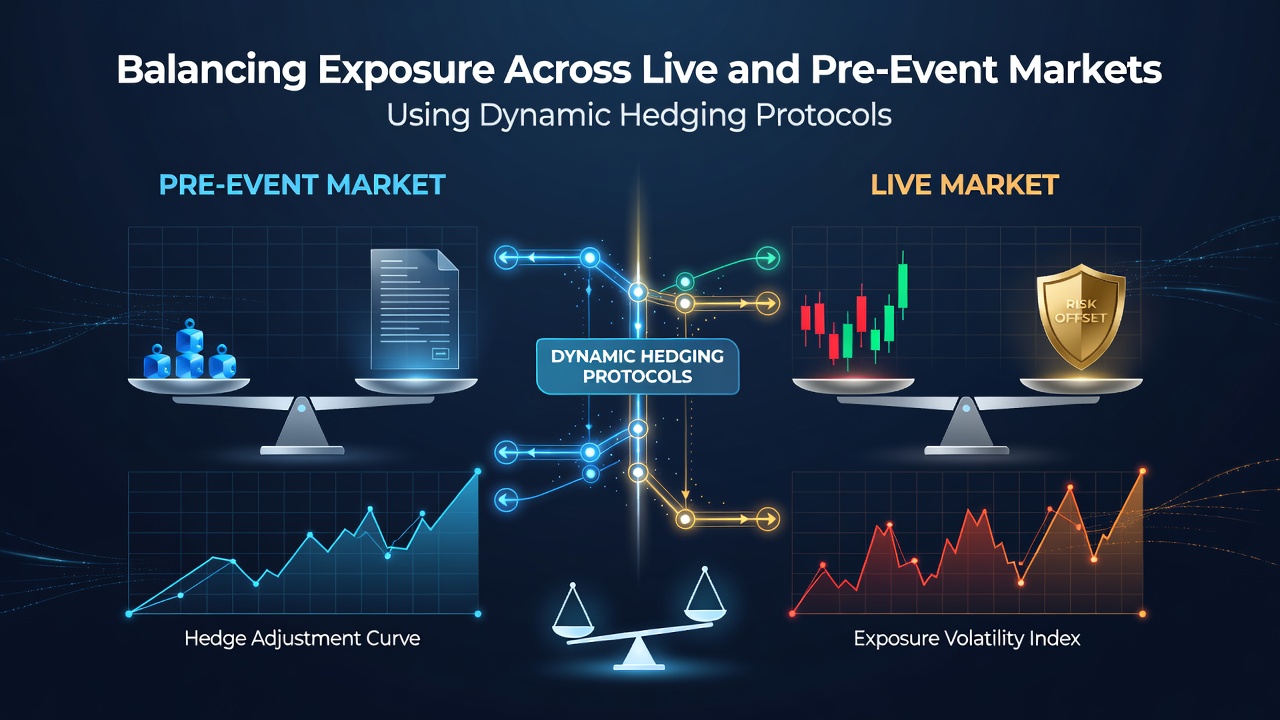
Market participants in sports wagering environments face constant shifts between pre-event odds and in-play fluctuations, and dynamic hedging protocols provide structured methods to maintain balanced exposure across both arenas. These protocols rely on real-time data feeds, correlation analysis, and automated position adjustments that respond to incoming bets and market movements simultaneously.
Pre-event markets establish initial pricing based on historical performance metrics, team form indicators, and external factors such as weather or venue conditions. Once an event begins, live markets introduce rapid price changes driven by actual outcomes unfolding on the field or track. Observers note that exposure imbalances often develop when bettors concentrate wagers on one side of a market while liquidity remains thin on the opposing side, creating potential for amplified losses if trends reverse unexpectedly.
Core Components of Dynamic Hedging Protocols
Dynamic hedging protocols integrate several layers of risk management. Position sizing algorithms calculate current net exposure by comparing open liabilities in pre-event books against live market activity. Correlation matrices then identify offsetting opportunities, such as pairing a pre-event favorite position with live underdog bets when momentum indicators shift. Automated execution systems place counterbalancing wagers within milliseconds of detected imbalances, reducing manual intervention requirements.
Industry reports from the European Gaming and Betting Association highlight how these systems incorporate volatility filters that pause hedging actions during extreme price swings, preventing over-correction. Data from betting exchange platforms shows that operators using layered protocols achieved more stable profit margins during high-volume events compared to static hedging approaches.
Application Across Different Sports and Event Types
Football matches illustrate one common use case where pre-event totals markets often attract heavy action on overs, while live markets pivot toward unders once defensive patterns emerge. Hedging protocols monitor possession statistics and shot accuracy in real time, triggering adjustments that offset the initial exposure. Similar patterns appear in basketball where quarter-by-quarter scoring rates influence live spreads, allowing protocols to redistribute risk across multiple time segments.
Horse racing presents distinct challenges because each race lasts only minutes yet generates dense live betting volume. Protocols here track pace forecasts against actual sectional times, enabling rapid switches between win, place, and each-way positions. Researchers at the University of Sydney's gambling studies unit documented cases where dynamic adjustments reduced variance in returns during multi-race programs.

Technical Implementation and Data Integration
Effective protocols depend on high-speed data pipelines that aggregate information from multiple exchanges and bookmaker APIs. Machine learning models trained on historical event data predict likely price trajectories, supplying probability estimates that guide hedge ratios. These models update continuously as new information arrives, maintaining accuracy even when external variables like player injuries or track conditions change mid-event.
July 2026 saw several major platforms release updated API documentation that standardized real-time exposure reporting formats, allowing third-party hedging tools to integrate more seamlessly. This development reduced latency between signal detection and order execution across participating operators.
Regulatory and Operational Considerations
Regulatory frameworks in various jurisdictions require operators to demonstrate adequate risk controls, and dynamic hedging systems often form part of those compliance records. Australian regulatory bodies, for instance, have examined how automated protocols contribute to responsible market-making practices without creating artificial price distortions. Operators maintain audit trails that record every hedge transaction, supporting transparency requirements.
Staff training programs focus on interpreting protocol outputs rather than manual execution, since the systems handle most adjustments autonomously. This division of labor allows risk teams to concentrate on scenario planning and model calibration instead of constant monitoring.
Conclusion
Dynamic hedging protocols continue to evolve alongside improvements in data processing speeds and predictive modeling techniques. They address the fundamental mismatch between pre-event liquidity and live market volatility by maintaining continuous alignment of positions. Operators and sophisticated bettors alike rely on these structured approaches to manage exposure across time horizons, supported by expanding regulatory clarity and technological standardization in the sector.