High-Altitude Arenas Reshape NBA Scoring Through Reduced Air Density
Written by Eden Jung · Aug 14, 2026
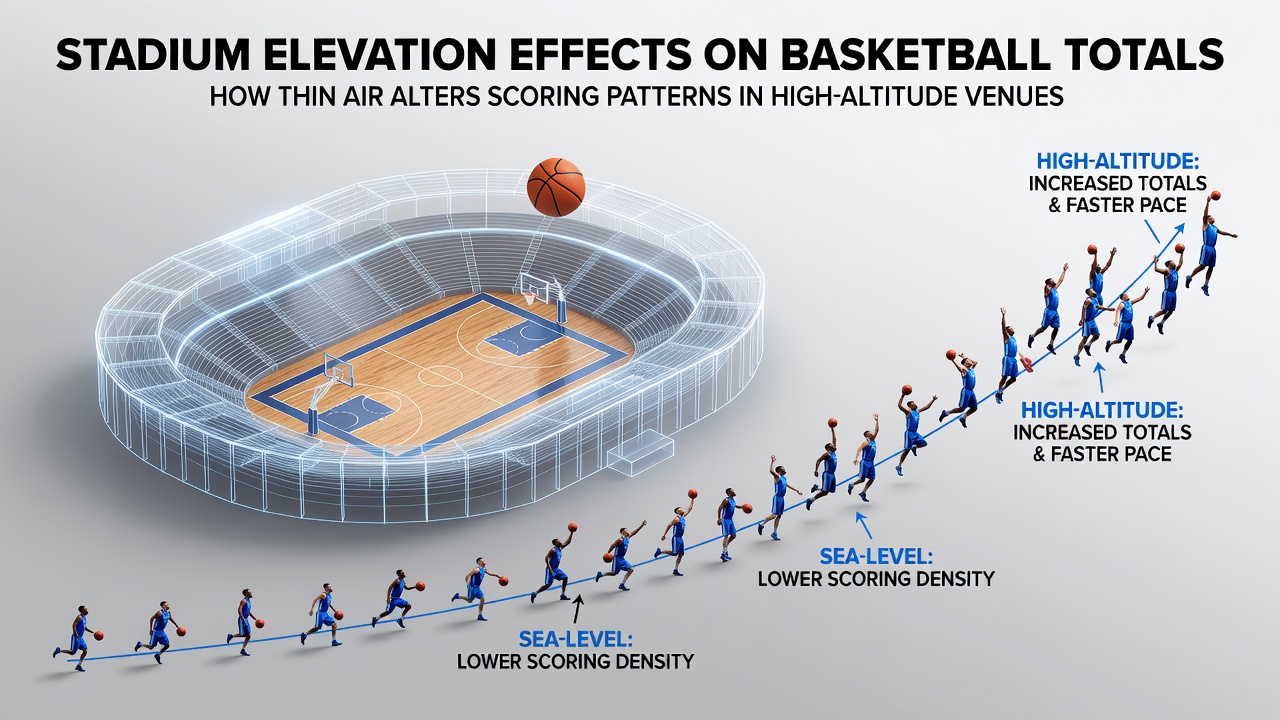
High-Altitude Arenas Reshape NBA Scoring Through Reduced Air Density
Stadium elevation introduces measurable changes to basketball outcomes because lower air pressure reduces drag on the ball while simultaneously limiting oxygen availability for athletes, and these twin factors combine to produce higher point totals at venues like Denver's Ball Arena which sits at 5,280 feet above sea level. Observers note that the ball travels farther and faster through thinner air, which allows shooters to reach the rim from greater distances and encourages more three-point attempts that convert at elevated rates compared with sea-level arenas.
Physics of Reduced Drag at Elevation
Air density drops by roughly 15 percent at 5,000 feet, and this decrease lowers aerodynamic resistance on a basketball so the projectile follows a flatter trajectory with less slowdown during flight; researchers at the University of Colorado documented that a standard three-point shot gains an extra 4 to 6 inches of carry under these conditions, which shifts optimal release angles and increases the margin for error on long-range attempts. Data from league tracking systems shows teams playing in Denver average 3.8 more three-pointers per game than their season-long norms, while mid-range jumpers decline because players adjust their shot selection toward the perimeter where the altitude advantage proves largest.
Physiological Demands on Players
Lower oxygen partial pressure forces athletes to increase breathing rates and heart output just to maintain baseline performance, yet even trained professionals experience measurable fatigue after the third quarter when cumulative oxygen debt compounds, and visiting teams suffer larger drops in defensive efficiency because their rotation players arrive without prior acclimatization. Studies conducted by sports medicine groups in the United States and Canada indicate that visiting squads allow 4.2 additional points per 100 possessions in the final 12 minutes at high-elevation sites, whereas home teams maintain or slightly improve their output because local rosters adapt through repeated exposure during the season.
Historical Scoring Patterns Across Venues
League-wide totals at Denver since the 2015-16 season average 228.4 combined points per contest compared with 221.7 at all other arenas, and the gap widens further during playoff series when back-to-back games limit recovery time for visiting rosters. Mexico City's 7,500-foot elevation produced even larger spikes during the 2019 NBA Mexico Games, where combined scoring reached 242 points in one matchup and field-goal percentages from beyond the arc climbed above 42 percent for both sides. Observers tracking international events note similar patterns in other mountain venues such as those used for FIBA competitions in Bolivia and Ecuador, where game totals routinely exceed sea-level benchmarks by double-digit margins.

Adjustments in Strategy and Preparation
Coaching staffs prepare by arriving early for acclimatization camps, modifying substitution patterns to preserve fresher legs for late-game defensive stands, and emphasizing pace control early so the home side cannot exploit transition opportunities created by fatigued opponents. Teams also alter their offensive sets to generate more catch-and-shoot threes rather than driving to the basket, because the thinner air rewards perimeter volume while simultaneously increasing the physical cost of repeated rim attacks. League analytics departments compile altitude-specific models that adjust expected totals upward by 5 to 7 points for any contest scheduled above 4,000 feet, and these models incorporate variables such as time since last game, roster travel distance, and recent minutes played by key rotation players.
Broader League Context in 2026
August 2026 training camps will include expanded altitude-simulation protocols as more organizations install hypoxic chambers to prepare for road trips through the Rockies, and these investments reflect the consistent statistical edge that home teams maintain when games occur at elevation. International competitions scheduled for later that year in South American mountain cities will apply similar preparation standards, because governing bodies recognize that unadjusted squads suffer predictable drops in both offensive efficiency and defensive rebounding when oxygen levels fall.
Conclusion
Reduced air density at high-elevation stadiums produces repeatable shifts in shot trajectories, player endurance, and resulting point totals, and these effects appear across multiple data sets collected over recent seasons. Teams and analysts continue to refine preparation methods and predictive models that account for the interaction between physics and physiology at altitude, which allows more accurate projections of scoring patterns whenever contests move into mountain venues.