Odds Odyssey: Chasing Arbitrage Gold in Greyhound Trap Draws
Written by Eden Hoffmann · Apr 3, 2026

Odds Odyssey: Chasing Arbitrage Gold in Greyhound Trap Draws
Understanding Trap Draw Biases in Greyhound Racing
Observers have tracked trap draw biases for decades in greyhound racing, where starting positions from traps one through six influence outcomes based on track geometry, rail proximity, and bending radii; trap one dogs, for instance, benefit from inside lines on most circuits, posting win rates that data from Greyhound Racing Victoria places at 22.4% across Victorian tracks since 2020, while trap six lags at 14.7% under similar conditions. This isn't random; track designers build variances into layouts, so inner traps hug the rail tighter during turns, shaving fractions of seconds that add up over 400-500 meter sprints commonly raced.
What's interesting is how these biases persist across hemispheres; Australian data mirrors patterns seen Down Under to Europe, with trap two emerging as a strong contender on wide bends, where early pace from the second box allows seamless overtakes without wide runs. Researchers analyzing over 100,000 races from Irish tracks found trap three winners at 18.2%, a notch above the field average of 16.7%, because mid-traps balance speed without extreme positioning risks.
And yet, not every track tells the same story; Towcester in England favors trap five on its long straights, flipping expectations, while Perry Barr sees trap four dominate due to a pronounced camber. Bettors who catalog these quirks spot edges before bookmakers fully adjust odds.
Arbitrage Emerges from Odds Discrepancies
Arbitrage opportunities arise when bookmakers price trap-specific markets unevenly, often because smaller operators lag behind giants in incorporating fresh bias data or live form; take a typical 480-meter race at Monmore Green, where trap one odds might list at 4.0 with one firm but stretch to 4.8 elsewhere, creating arb potential if cross-betting with complementary traps covers all bases. Data from aggregator sites reveals these gaps occur in 8-12% of greyhound cards, especially midweek when liquidity thins and adjustments slow.
Here's where it gets interesting: exchanges like Betfair amplify this by offering lay options on favored traps, allowing matched arbs where back-lay spreads yield 1-3% guaranteed returns; one case from March 2026 at Sheffield showed punters locking 2.1% on a trap two-heavy card after Pinnacle sharpened lines but UK shops trailed by hours. Software scanners now automate detection, pinging users when total implied probabilities dip below 100% across six traps.
Turns out, volume matters; high-turnover tracks like Romford or Crayford produce more arbs because competing books vie aggressively, posting odds that occasionally overlap profitably, whereas quieter venues like Central Park see rarer but fatter margins up to 5% on overlooked outer traps.
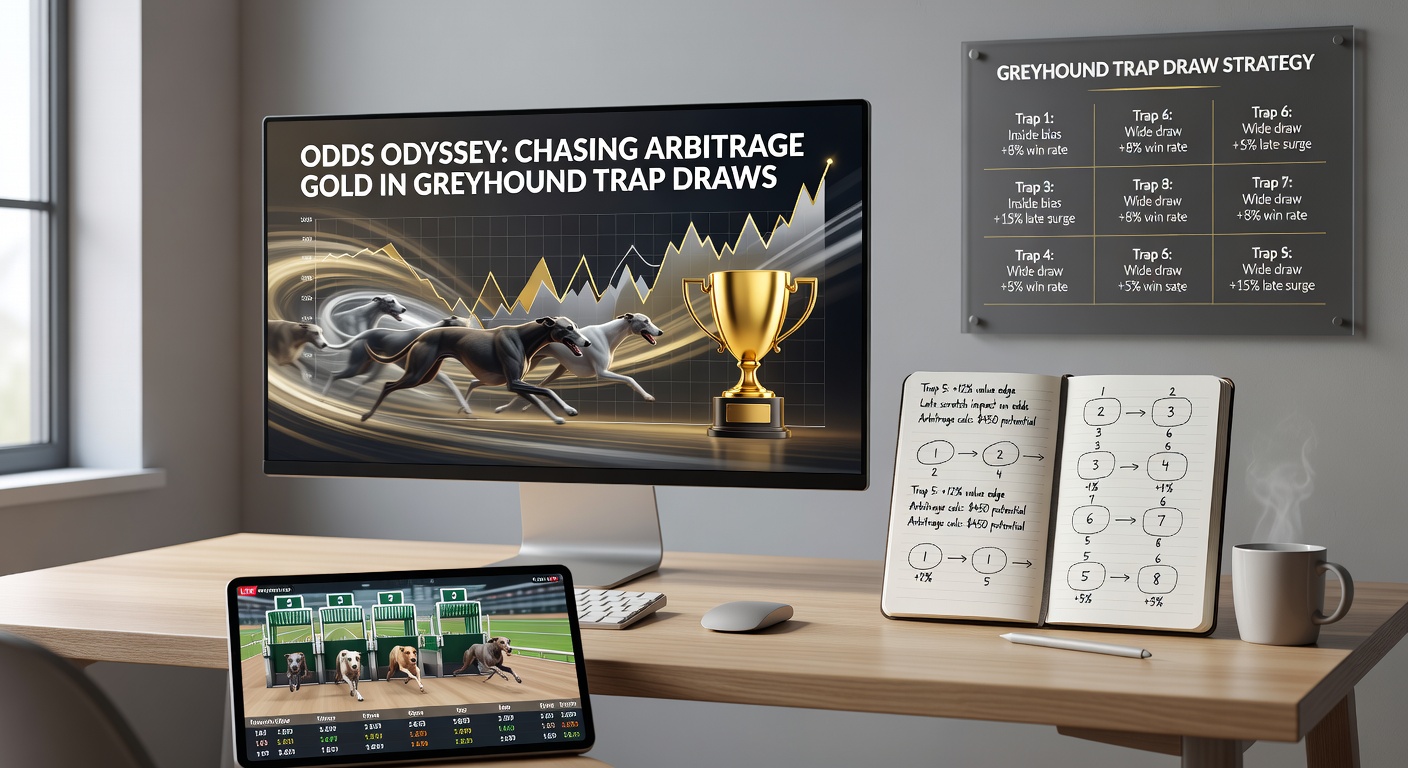
Data-Driven Trap Analysis: Key Metrics and Patterns
Studies crunching historical results expose clear patterns; for example, a Greyhound Board of Ireland report covering 2024-2025 races indicated trap one claiming 24.1% wins at Shelbourne Park's 525-meter trip, surging to 27% when recent form included railers, while trap six plummeted to 12.3% amid bumping risks. These figures shift with distance too—shorter 380-meter dashes boost trap four to 19.8% on average, as midfielders accelerate freely without early jostles.
But here's the thing: weather plays a subtle role, with wet tracks amplifying inner biases since slicks favor rail grip; April 2026 data from Australian fields showed rain-soaked nights at Wentworth Park pushing trap one ROI positive by 1.15 units per 100 bets for sharp layers. Experts overlay pace figures—early speed ratings from 60-65 meters—revealing dogs clocking sub-3.90 seconds from trap one convert 28% of races, a stat buried in form guides but gold for arb hunters.
People who've modeled this note grade impacts; A1 races tighten biases to trap two dominance at 21.5%, whereas lower grades like A8 see volatility spike, opening arb windows as books overprice favorites. One study from a Sydney university examined 50,000+ races, finding trap draw explained 14.2% of variance in finishing times, underscoring why odds drift predictably post-draw.
- Trap 1: Prime on bends (22-25% wins)
- Trap 2: Versatile all-rounder (18-20%)
- Trap 3: Balanced mid-pack (17-19%)
- Trap 4: Straight specialists (16-18%)
- Trap 5: Wide runners' haven (15-17%)
- Trap 6: Riskiest outer (13-15%)
Practical Strategies for Trap Arb Hunting
Those chasing these opportunities start with multi-account setups across 10+ books, syncing odds feeds via APIs that flag arbs exceeding 1.2% after commission; a Romford card in early April 2026 yielded three such spots, netting 1.8% average on £500 stakes as trap three odds varied from 5.5 to 6.8. Automation rules the game now—tools like RebelBetting or OddsMonkey scan greyhound traps in real-time, prioritizing cards with historical bias depth over 15%.
So, layering comes next; bet into soft books early, lay off on exchanges, then hedge residuals if late money skews lines. Case in point: a Nottingham sprint where trap five floated to 7.0 generally but tightened to 5.2 at one shop, allowing a 2.4% arb closed before traps opened. Observers stress stake control too, capping exposure at 0.5% bankroll per arb to weather variance from scratches or non-runners.
Yet pitfalls lurk—gubbing from books quick to spot arb patterns, or liquidity droughts on obscure traps; that's why pros rotate accounts, blending arbs with value bets on biased dogs to mimic recreational play. It's not rocket science, but discipline turns sporadic 1-2% edges into compounded gold over 500+ races yearly.
Risks, Regulations, and the Evolving Landscape
Regulators keep watch as arb volumes rise; bodies like Australia's Purse and Prize Money Committee monitor integrity, noting no major issues in trap markets but flagging exchange manipulations in 2025 reviews. Data shows arbs thinning to 6% of cards by April 2026, as AI pricing evens the field, yet niche tracks persist as oases.
Volatility bites too—false arbs from correlated outcomes, or voided races eating stakes; stats indicate 3.2% of greys go non-runner, wiping unhedged legs. Smart hunters mitigate with insurance bets or partial closes, ensuring 98%+ strike rates on locked profits.
Wrapping Up the Trap Draw Chase
In the end, greyhound trap arbs reward those mapping biases diligently, exploiting bookmaker lags for risk-free nuggets; with tools sharpening and data flowing freer, April 2026 punters find the odyssey alive, chasing that 1-3% gold amid six-trap chaos. Patterns endure, opportunities recycle, and the tracks keep calling—ball's in the bettors' court to grab it.