Tracing Liquidity Flows in Exchange-Based Tennis Markets During Grand Slam Qualifying Rounds
Written by Kai Zimmermann · Jul 12, 2026

Tracing Liquidity Flows in Exchange-Based Tennis Markets During Grand Slam Qualifying Rounds
Exchange-based betting platforms operate with visible order books where participants post bids and offers on tennis outcomes, and liquidity flows represent the volume and speed of matched wagers that shift prices during Grand Slam qualifying rounds. These early-stage matches feature players outside the main draw, which creates thinner initial markets compared to later rounds, and data from multiple seasons shows liquidity often builds gradually as information on player fitness and surface adaptation emerges. Researchers tracking these patterns note that qualifying rounds in events such as the 2026 Wimbledon series, which began in early July, typically open with lower matched volumes that accelerate once seeding announcements and practice reports circulate.
Mechanics of Liquidity Measurement on Betting Exchanges
Market depth on exchanges is quantified through available stake at each price point, and analysts monitor the rate at which new orders enter and existing ones are matched or withdrawn. During qualifying sessions, liquidity tends to concentrate on the most probable outcomes first, with secondary selections gaining volume only after early matches conclude and form lines clarify. Studies from university finance departments have examined similar order-flow dynamics in prediction markets, revealing that tennis qualifiers exhibit faster liquidity migration between sets because match durations are shorter than in team sports and score updates arrive rapidly. Observers note that automated trading programs often supply initial liquidity, while manual traders add depth once key statistics such as first-serve percentages become available through live data feeds.
Patterns Observed Across Recent Qualifying Campaigns
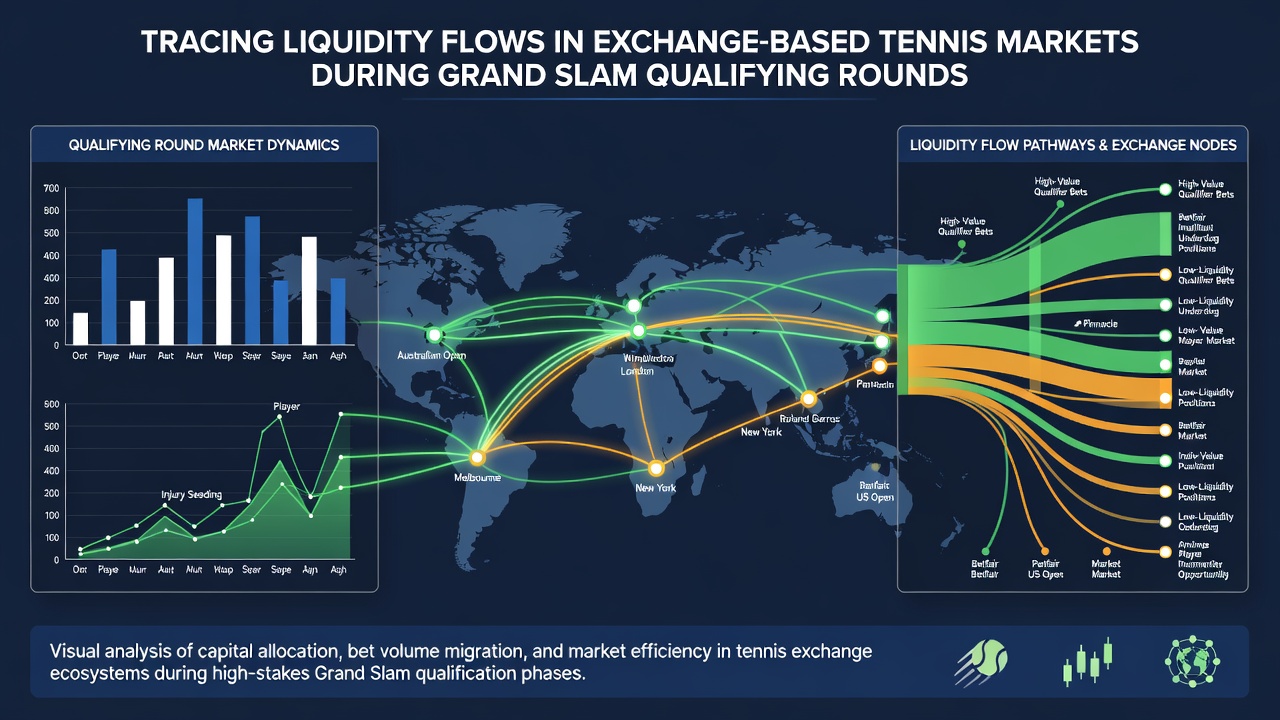
Figures compiled by industry research groups indicate that average matched volume per qualifying match rises steadily from the first round to the final qualifying round, with the largest increases occurring on outer courts where fewer simultaneous matches compete for attention. In July 2026, preliminary data from teh Wimbledon qualifiers showed liquidity clustering around matches involving players with recent Challenger-level results, while matches between lower-ranked entrants maintained wider spreads until one side established an early lead. Those who have analyzed multi-year datasets point out that liquidity often shifts toward the player who breaks serve first, reflecting the high correlation between early breaks and overall win probability on grass and hard courts used in most Grand Slam events.
Influences on Order Flow Timing and Volume
Weather conditions, court speed, and scheduling changes affect when liquidity arrives, because traders adjust positions once they receive confirmation of surface conditions or delays. Exchange records demonstrate that matches scheduled in the late afternoon frequently attract additional liquidity as European and Asian participants become active, creating distinct volume spikes that analysts can map against time zones. Academic papers examining betting exchange data have documented how suspension and resumption of play alters unmatched orders, with many participants canceling limit orders during rain delays and re-entering once play resumes. In Grand Slam qualifying, where courts are shared and schedules compressed, such interruptions produce measurable liquidity resets that reset price discovery until new information arrives.
Data Sources and Analytical Approaches
Betting exchanges publish historical tick data that researchers use to reconstruct order-book evolution, and regulatory filings from authorities such as the European Gaming Regulators Association provide aggregate market-size estimates that contextualize individual event liquidity. University-led projects have applied machine-learning models to identify clusters of liquidity injection that precede sharp price movements, offering a framework for tracing how information propagates through the order book. One analysis of Australian Open qualifying data, for instance, highlighted that liquidity in five-set matches builds differently from best-of-three formats because participants anticipate longer durations and adjust stake sizes accordingly. Cross-referencing these patterns with official tournament statistics from the International Tennis Federation allows observers to separate volume driven by match events from volume driven by external news.
Conclusion
Exchange liquidity in Grand Slam qualifying rounds follows identifiable sequences tied to match timing, player profiles, and external data releases, and continued collection of order-book records supports ongoing examination of how these flows evolve across different surfaces and calendar placements. The 2026 season has already supplied additional datasets that extend previous observations, confirming that liquidity concentration remains strongest in the final qualifying round where progression to the main draw carries greater financial implications for participants and traders alike.