Tracking Referee Bias Patterns Across European Football Leagues for Live Market Edges
Written by Eden Jung · Jun 26, 2026
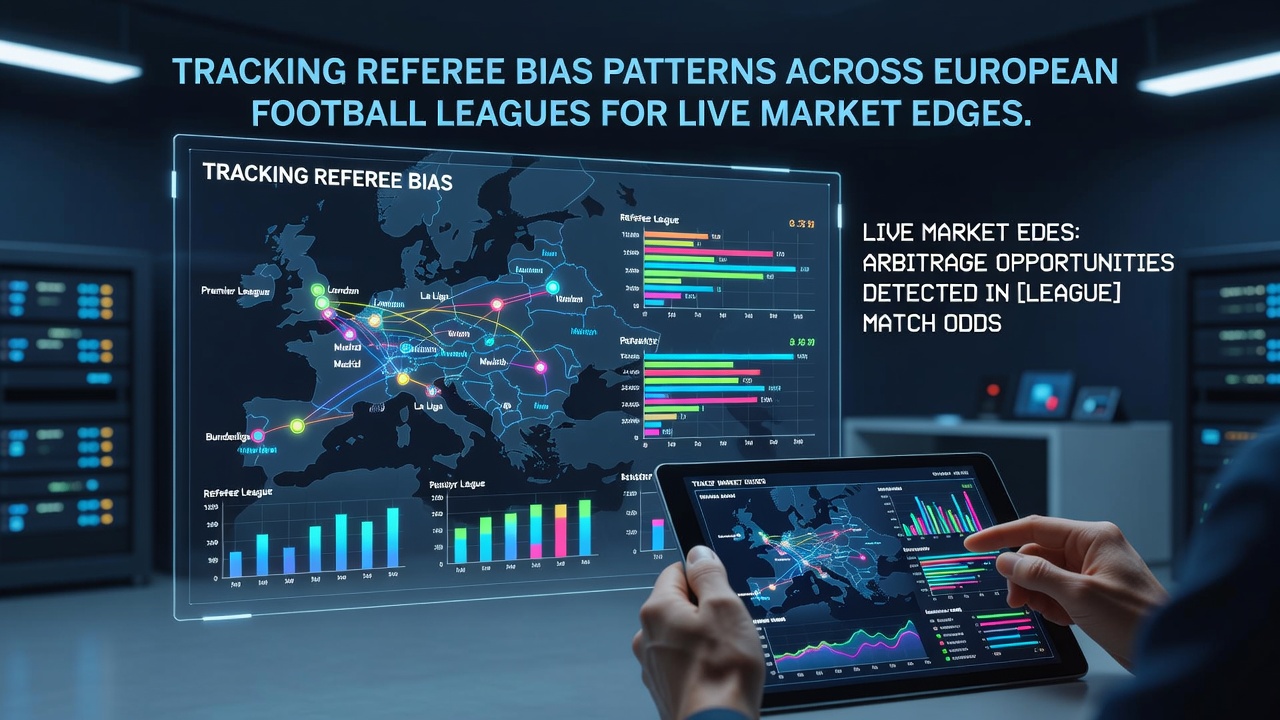
Tracking Referee Bias Patterns Across European Football Leagues for Live Market Edges
European football leagues generate extensive datasets on referee performance each season, and those who study these patterns find consistent variations in how officials manage fouls, cards, and penalties across different competitions. Researchers compile statistics from sources like match reports and official league records to identify tendencies that shift during live play, particularly when scorelines change or time remaining decreases.
Core Metrics Used in Bias Analysis
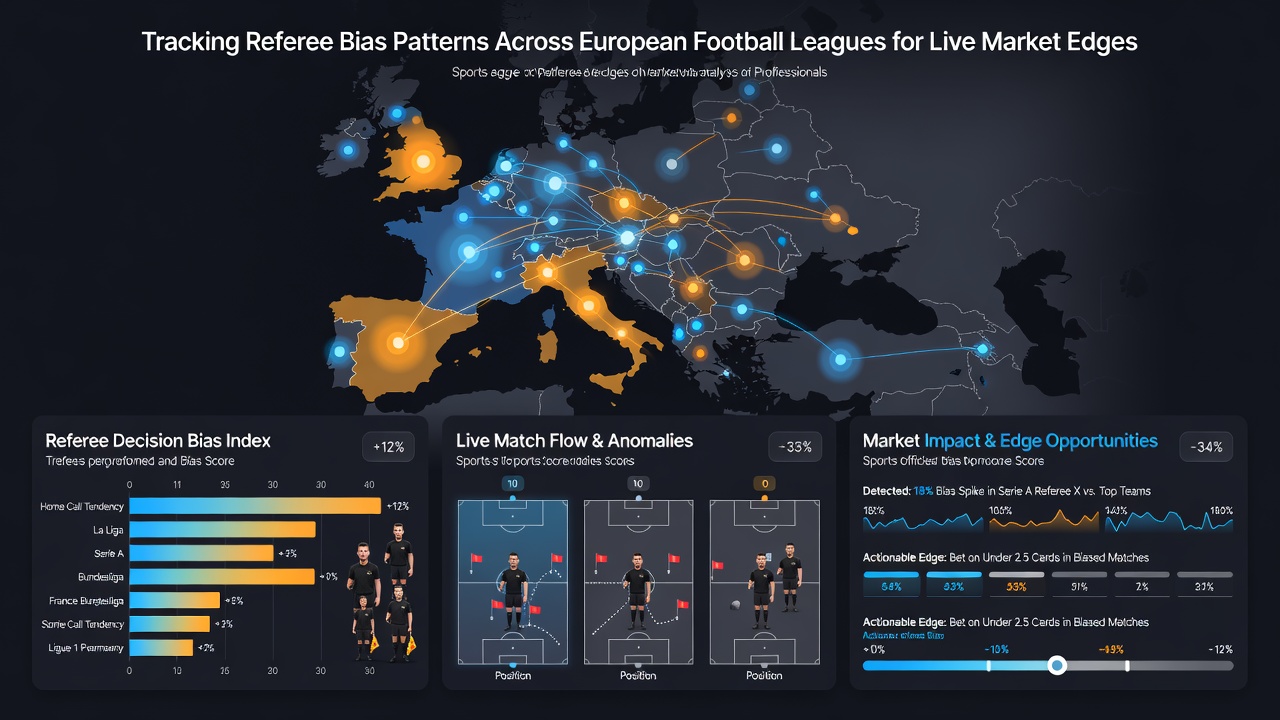
Analysts focus on measurable indicators such as yellow cards issued per 90 minutes, penalty awards relative to expected fouls in the box, and red card distributions between home and away sides. Data from the 2024-25 campaign across the top five leagues shows Bundesliga referees averaging 5.2 cards per game while Serie A officials recorded 4.8, with variations widening in matches involving teams from the lower half of the table. These figures allow pattern tracking without relying on subjective interpretation.
Live market edges emerge when bettors monitor real-time deviations from established baselines. For instance, when a referee who typically awards 0.3 penalties per match suddenly issues two in the opening 30 minutes, algorithms flag the anomaly for potential over/under adjustments on cards or corners in the second half. Observers note that such shifts often correlate with specific league environments rather than individual official quirks.
League-Specific Patterns Observed in Recent Seasons
La Liga records demonstrate a measurable home-team advantage in penalty decisions during evening fixtures, with data indicating 1.4 times more awards to hosts after the 70th minute compared to afternoon games. In contrast, the Premier League exhibits tighter distributions on disciplinary actions, though away sides receive 12 percent more yellow cards in derbies according to aggregated Opta records. Bundesliga matches feature higher overall foul counts, which creates opportunities in live betting when totals exceed pre-match projections early in the contest.
Those who track these metrics across borders highlight how weather and pitch conditions interact with referee styles. French Ligue 1 games played in cooler temperatures during spring months show reduced card rates, whereas Serie A encounters in humid conditions produce elevated stoppage-time additions that influence injury-time goal markets. Patterns become clearer when datasets span at least three full seasons, allowing seasonal adjustments for rule changes or VAR implementation updates.
Application to In-Play Betting Strategies
Live edges develop when models compare ongoing match statistics against historical referee profiles. A referee with a documented tendency to issue cards after the 80th minute in high-stakes fixtures can create value on late yellow-card props once the game enters that window. European Club Association reports indicate that such tendencies remain stable year-over-year for most officials, though new appointments require fresh calibration periods of roughly 10 matches.
Analysts integrate these insights with possession and shot data to refine expectations. When a match features elevated duels in midfield, referees who favor stricter enforcement of advantage rules alter the expected flow, prompting adjustments to corner and throw-in markets. Data from the 2025-26 season through May demonstrates that leagues with centralized referee training programs, such as the Bundesliga, maintain lower variance in decision timing compared to those with regional oversight structures.
Data Sources and Verification Methods
Comprehensive tracking draws from multiple layers of information, including official league APIs, broadcast timestamps, and third-party verification services. A study published by the University of Leuven examined over 12,000 matches and confirmed that referee nationality exerts minimal influence once league-specific norms are accounted for, directing attention instead toward fixture congestion and travel distances. UEFA technical reports provide supplementary context on how elite competition experience shapes decision consistency in domestic leagues.
Cross-referencing with club-submitted complaints and post-match reviews adds another verification tier. Patterns that survive this filtering process show greater predictive reliability for live scenarios, particularly when markets react slowly to early deviations in foul frequency. Industry groups such as the European Sports Betting Association compile anonymized datasets that further support these calibration efforts across borders.
Conclusion
Systematic monitoring of referee metrics across European leagues supplies objective inputs for live market analysis. Consistent patterns emerge from long-term data collection rather than isolated incidents, and integration with real-time match events allows for precise adjustments once baselines are established. Continued refinement of these approaches relies on expanding datasets and standardized reporting from league authorities.