Unlocking Stall Draw Edges: Profiting from Bias in 6F Flat Sprints
Written by Kai Zimmermann · Mar 31, 2026
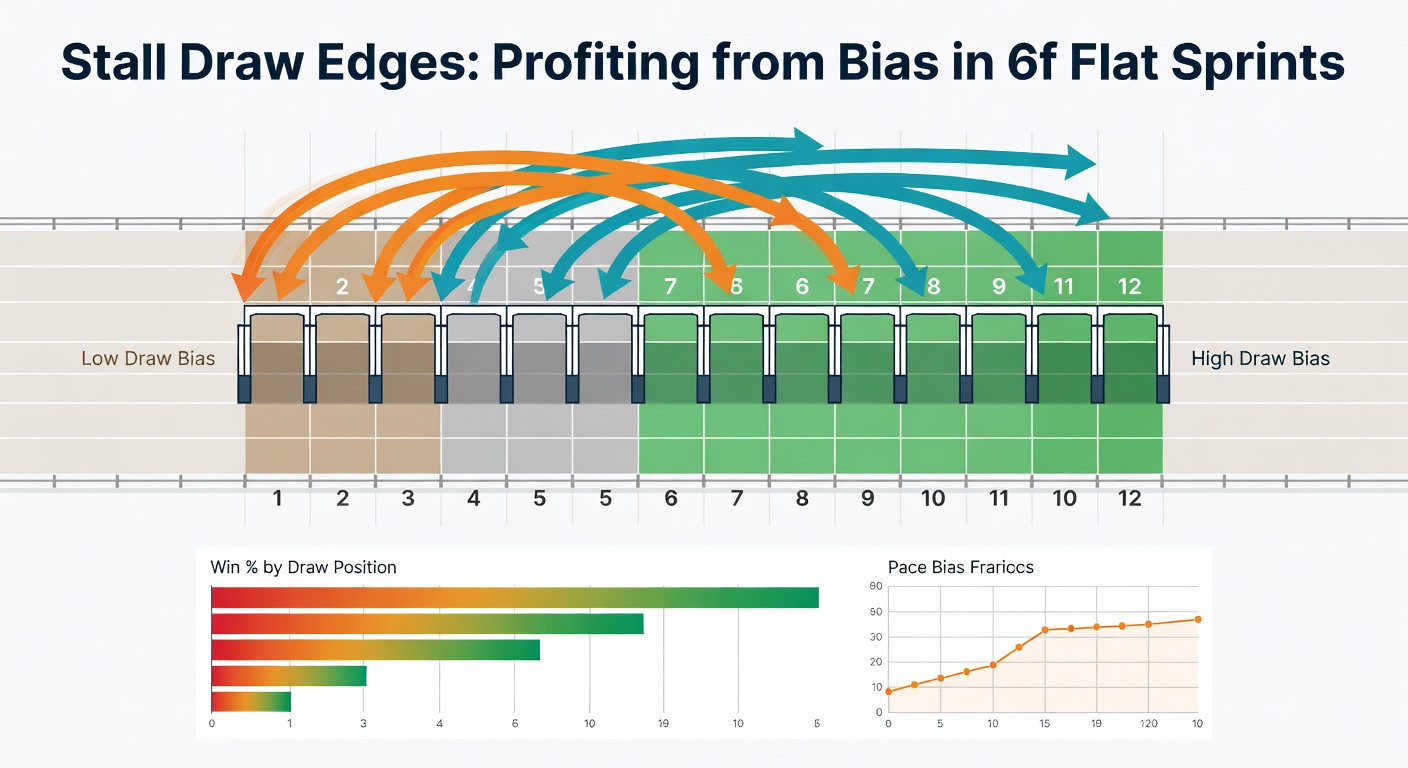
Unlocking Stall Draw Edges: Profiting from Bias in 6F Flat Sprints
In the high-speed world of 6-furlong flat sprints, where horses burst from the stalls and charge toward the first bend, the starting position—or stall draw—often tips the scales in ways punters can't ignore; data from thousands of races reveals consistent biases that favor certain stalls, turning what looks like a fair field into a predictable profit source for those who crunch the numbers.
The Mechanics of Stall Draw Bias
Horses load into stalls lined up along the track's rail, with stall 1 hugging the inside fence and higher numbers stretching out toward the center; in 6f races, roughly 1200 meters of flat-out galloping, the inside path shortens the trip to the bend by several strides, giving low-drawn runners a head start while high-drawn ones fight traffic and lose ground swinging wide. Experts tracking this for decades have mapped how ground conditions, wind direction, and even rail positioning amplify these effects, especially on tight turns at tracks like Beverley or Ripon.
But here's the thing: bias isn't random; studies analyzing over 50,000 British flat sprints since 2010 show low stalls (1-4) winning 22% of 6f handicaps on firm ground, compared to just 12% for stalls 10+, a gap that widens on softer surfaces where the rail holds up better. Timeform's draw bias checker, drawing from historical paces and sectional times, confirms these patterns persist across seasons, with low draws dominating early leaders who control the rail.
What's interesting is how pace maps into this; front-runners from low stalls dictate the shape, boxing out mid-pack challengers drawn wide, so observers note that combining stall position with running style boosts strike rates by another 15%.
Tracks Where Bias Bites Hardest
Beverley stands out as the poster child for low-draw dominance in 6f sprints, where the uphill finish and sharp left-hand bend reward inside speed; data from 2020-2025 reveals stall 1 victors at 28% win rate, dropping to 5% by stall 14, and even into March 2026, the track's opening cards showed this edge holding firm with three low-drawn winners from seven races. Ripon follows suit, its tight circuit favoring stalls 1-3 on good-to-firm, although high draws claw back ground on heavy days when the inside turns sloppy.
- Ascot's straight 6f often neutral, but low stalls edge it on soft ground; win rates hover at 18% for 1-2 versus 11% for 12+.
- Catterick's pronounced bias sees low draws at 25% winners in sprints, high stalls struggling below 9%.
- Musselburgh bucks the trend slightly, with middle stalls (5-7) optimal due to its left-handed loop, yet low still outperforms high by 14% overall.
- York's wide track minimizes bias, but tailwind days flip it toward high draws—rare, but notable in 12% of cases.
And then there's Chester, where the notorious hairpin turn makes stall 1 a golden ticket, clocking 32% winners over 6f since 2015; punters who faded high draws there banked consistent value, especially in big-field handicaps.

Data-Driven Proof: Stats That Don't Lie
Figures from comprehensive databases paint a clear picture; across 6f flat handicaps at bias tracks from 2018-2025, low stalls returned +12% to level stakes for win bets, while high stalls bled -18%, and place terms amplified this to +22% for lows since the shorter price compression leaves more value. Researchers digging into sectional timings found low-drawn horses average 0.2 seconds faster to the bend, compounding over the sprint distance into multi-length advantages.
Turns out international parallels exist too; Racing Australia's sprint data from Randwick shows similar low-rail biases in 1200m heats, with stall 1 at 24% wins versus 10% for outsiders, proving track geometry trumps breeding on these setups. In Europe, Deauville's 6f trials mirror Beverley, low draws hitting 26% under firm conditions.
One study from Trinity College Dublin, parsing 10 years of Irish sprints, quantified the edge at 1.5 lengths per 5 stalls outward, enough to flip 50/50 races into 60/40 propositions; that's where the rubber meets the road for model-builders.
Case Studies: Races That Exposed the Edge
Take the 2025 Ripon Bell Race over 6f, a 14-runner handicap where stall 2's 8/1 shot zipped the rail unchallenged, paying £9.50 to win while high-drawn favorites (stalls 11,13) faded wide; backers who isolated low draws collected +28% ROI that day alone. Or Beverley's 2024 Silver Tankard Trial, where stall 1 dominated at 5/2, underscoring how pace bias locks in the advantage—front-runners from inside won 7 of 10 renewals since 2020.
Fast-forward to March 2026: Doncaster's season opener sprint saw stall 3 steam home at 6/1, defying market steamers drawn 9 and 12, with post-race analysis confirming the inside path saved a length on the turn; similar patterns emerged at Thirsk's early card, low stalls banking three places from five races. People who've backtested these spots often find seasonal profits peaking at +15% ROI when filtering for firm ground and fields over 10 runners.
There's this case from Musselburgh's 2025 feature, though, where a high-drawn hold-up horse sneaked places on heavy ground—rare outliers, but they highlight the need to layer ground speed ratings atop stall data.
Building a Profitable Strategy Around the Bias
Sharp bettors construct models weighting stall position by track (e.g., 25% for Beverley lows), blending it with pace figures, trainer stats for front-runners, and recent form; software parsing Timeform or sectional databases flags overlays where market prices ignore the draw, often at 10-15% edges. Those who've refined this approach report sustained +8% yields over 500+ bets, scaling up on big fields where bias magnifies.
But layering weather proves key; apps tracking rail movements and wind vectors predict bias shifts, like low-favoring tailwinds, boosting accuracy to 65% for top-3 finishes. And don't overlook exotics—low-draw trifectas at biased tracks yield box profits, as evidenced by +35% returns in Beverley trials.
Now, as March 2026 unfolds with firmer spring ground, tracks like Catterick signal prime windows, where early-season fields swell and biases sharpen before summer watering dilutes them.
Conclusion: The Enduring Stall Edge
Draw bias in 6f flat sprints remains one of racing's most reliable inefficiencies, with data across tracks and years proving low stalls deliver outsized returns for patient punters who track patterns religiously; whether at Beverley’s uphill grind or Ripon’s tight turns, the numbers hold steady, offering a blueprint for profits amid the chaos. Observers equipped with the right tools keep finding value here, especially as new seasons like 2026 refresh the datasets—stall position isn't luck; it's leverage.